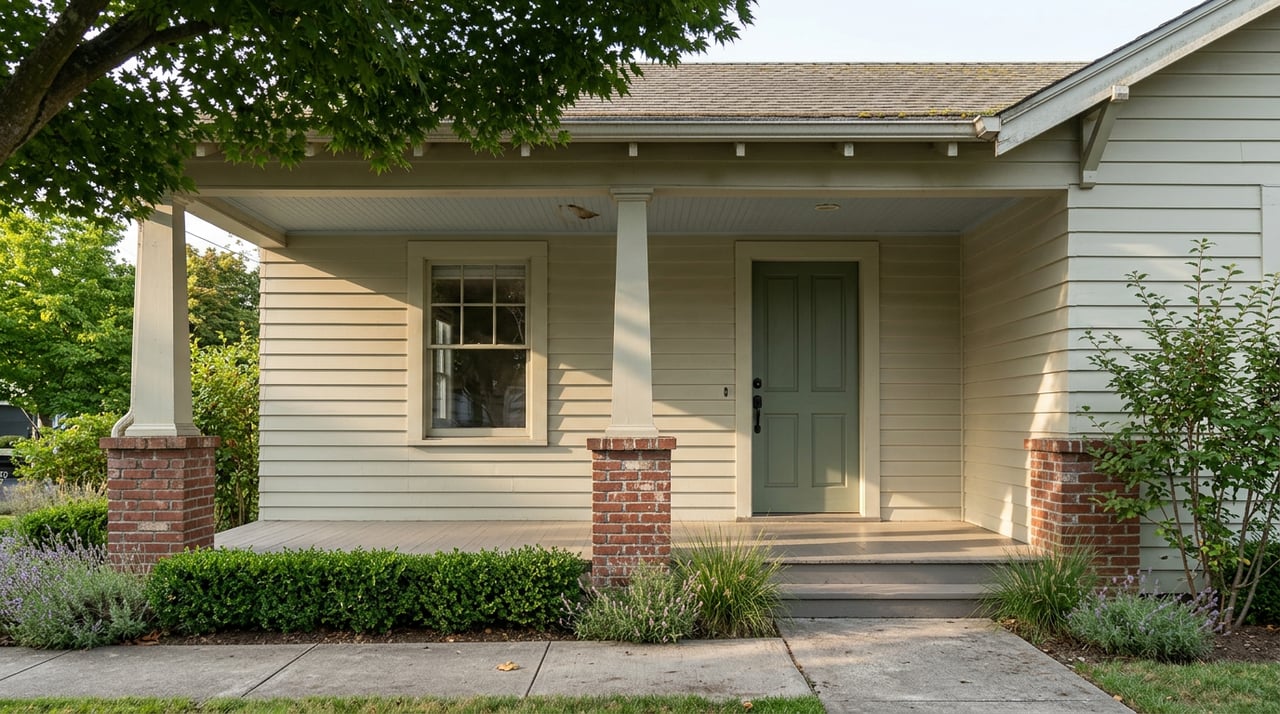
Caldwell's Older Homes: Water Rights, Inspections and Historic Review
August 13, 2026
August 13, 2026
A buyer walks two 1920s bungalows on the same afternoon. Both sit within a few blocks of the College of Idaho. Both have hardwood floors, updated kitchens, and asking prices within a few thousand dollars of each other. One closes in four weeks without a hiccup. The other stalls twice, once when the inspector opens the electrical panel, and again when the title company flags an issue nobody mentioned during showings.
Same neighborhood. Same era. Same price range. Different homework.
That gap is the real story behind Caldwell's affordability. The city's median sale price has been sitting right around $400,000 this summer, roughly a third below what a comparable home costs in Eagle or Boise. That discount is not a gift. It is compensation for two categories of due diligence that buyers in newer subdivisions rarely have to think about: what is physically attached to the parcel, and what decade the home's systems were built for. Neither shows up in listing photos. Both show up in Caldwell's older housing stock, particularly downtown and around the College of Idaho.
Much of Caldwell sits inside Pioneer Irrigation District, a non-profit district established in 1901 that delivers water to more than 34,000 acres across Canyon County and western Ada County. If a property carries irrigation shares, check what obligations may be associated with them.
Two rules catch buyers off guard most often. First, water isn't automatic. Users have to order water on or off through a ditchrider, and Pioneer Irrigation requires a minimum of 36 hours notice before delivery starts or stops. Second, Pioneer Irrigation says that if an assessment lien remains unpaid for three years, the district can move toward a tax deed.
Pioneer Irrigation's billing calendar is worth knowing before you write an offer, not after:
There's a second wrinkle that trips up buyers who assume every sprinkler system in Caldwell works the same way. Pioneer does not maintain pressurized irrigation inside most subdivisions. Once water reaches a pump station, the city of Caldwell or the city of Nampa typically takes over maintenance, billing, and scheduling for that subdivision's system. So the question is never just "does this house have irrigation." It's "who do I call when the sprinklers stop working, and is that assessment current."
Before writing an offer on a parcel with water rights, ask the seller directly whether shares exist, whether the district's records show a paid-up balance, and whether the property uses flood irrigation, a private ditch, or a city-maintained pressurized system. Those answers help clarify what you need to know before closing.
The second cost of Caldwell's price advantage lives inside the walls. A home built before 1970 was wired and plumbed for a different era of electrical demand and water chemistry, and Treasure Valley inspectors see the same handful of issues repeat across the city's older blocks.
Local inspectors report that knob-and-tube wiring, aluminum branch circuits, and Federal Pacific or Zinsco electrical panels remain common in Caldwell homes built before the 1970s. Those panel brands are known for defects that prevent proper circuit protection, and homes still running them often need a full panel replacement before an insurer or lender will sign off. Hard water in the area accelerates a second problem: premature water heater failure and mineral buildup that restricts flow inside older supply lines, a wear pattern that isn't visible during a showing.
Galvanized steel supply lines are the plumbing equivalent. They were standard in homes built from the 1930s through the 1970s, and the zinc coating that protects the steel erodes from the inside over time. A rough rule of thumb: galvanized pipe runs 40 to 50 years before it starts failing outright, which means a line installed during Eisenhower's second term is now well past warranty on any definition. A simple test at the point where a supply line enters the house tells you what you're dealing with:
| What you see | Likely material |
|---|---|
| Silver-gray, magnetic, threaded joints | Galvanized steel |
| Copper-penny color | Copper |
| White, red, or blue flexible tubing | PEX |
| Rigid white plastic | PVC |
| Milky gray or black | Polybutylene |
None of this means walk away from a Caldwell bungalow. It means the inspection contingency in your buyer's guide is doing real work here, not just checking a box. A panel that needs replacing or a supply line nearing the end of its service life is a known cost you can negotiate before closing. Discovering it after you own the house is a cost you absorb alone.
A lot of Caldwell's character housing sits inside the Steunenberg Residential Historic District, which the Advisory Council on Historic Preservation describes as one of the most historically intact neighborhoods in Idaho, with more than 330 residential properties. The district takes its name from Frank Steunenberg, Idaho's governor from 1897 to 1900. The Idaho Press reports that he was assassinated at his home in 1905, that the original house burned in a 1913 fire, and that a Craftsman bungalow was later built on the site, which is a useful reminder that even a historic address doesn't guarantee a historic structure.
The city's Historic Preservation Commission oversees the district, which matters if you're planning an addition, replacing original windows, or changing the exterior of a home inside the boundary. It doesn't mean you can't renovate. It means the process runs through an extra layer of coordination that a buyer in a newer Middleton Road subdivision never has to plan for. Worth a phone call to the city before you fall in love with a floor plan that assumes changes you may not be able to make quickly.
The pattern across both issues is the same. Nothing here is a reason to avoid Caldwell. The city's price advantage over Eagle and Boise is real, and for buyers who want more house for the money without leaving the Treasure Valley, that gap is worth taking seriously. The work is in reading the parcel and the systems the same way you'd read a disclosure form: line by line, before you're locked into a timeline.
A title search tells you whether irrigation shares exist and whether the district's account is current. A call to Pioneer Irrigation confirms the assessment status directly. A qualified inspector who knows what Caldwell's older housing stock tends to hide will flag the panel type and pipe material without you having to ask. None of that removes the age of the house. It just moves the cost from a surprise to a negotiation.
Does every home in Caldwell carry irrigation shares? No. A title search or a direct call to Pioneer Irrigation will confirm whether a property is enrolled and whether the account is paid up.
Is galvanized plumbing an automatic dealbreaker? Not automatically, but it's leverage. A home with original galvanized lines nearing the end of their service life is a reasonable point for a repair credit or a price adjustment, not a reason to walk unless the inspection turns up active leaks or contamination concerns.
Can I renovate a home inside the Steunenberg district? Generally yes, but exterior changes go through the city's Historic Preservation Commission. Confirm the scope of any planned work with the city before you write an offer if the renovation is part of your decision to buy.
If you're weighing a character home in Caldwell against new construction elsewhere in the valley, that's exactly the kind of comparison Chuck and Laura Costa walk through with clients before an offer goes in, not after. Reach out through their home valuation page to talk through what a specific Caldwell property actually carries, on the title and behind the walls, before you decide what it's worth to you.
This article is general information, not legal, tax or financial advice. Consult a qualified professional about your situation.
Stay up to date on the latest real estate trends.


A steady, strategic approach rooted in experience and clear communication. We prioritize your goals, protect your interests, and guide every decision with insight, preparation, and strong negotiation. From consultation to closing, we deliver a polished, well-managed experience designed to help you move forward with confidence.